I titled this post "Getting Some Art" instead of Collecting Art because it does not deal with the kind of serious art collecting associated with Sotheby's and Swiss vaults. Instead, I am hoping to share a few thoughts about collecting a range of art to aesthetically enhance your environment. Specifically, I am interested in discussing art as an emotional investment, as opposed to a speculative investment made in hopes of financial profit.
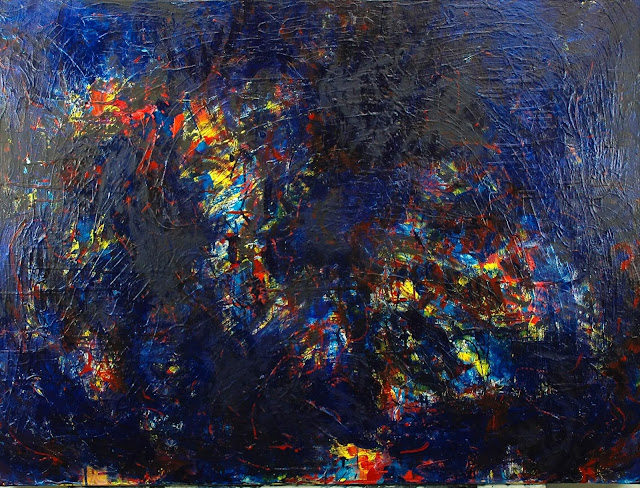
I have never really thought about what my art might be worth in terms of dollars. I would be very happy if my "art collection" were worth approximately what I spent. I would not, however, be very upset to hear that it was worth next to nothing. Why not? This would have very little to do with my emotional connection to the works. Further, I intend to hold these works forever or else pass them onto family members. I do not prize my art for its monetary value but each piece's enduring ability to communicate important things to me. I do not collect art to possess it but, rather, to enter into a long-term dialog with it.
I have bought art at galleries and at auctions but it has always been far more rewarding to build a personal relationship with an artist. I have found a lot of meaning through works from local artists like Eric Nauman, Nori Obata, her husband, Esteban Prieto, and my friend, Michael Rubin, whose works surround me now (see image below). The opportunity to be able to learn from an artist that you respect is a great privilege. I recommend seeking out local and emerging artists for this reason.

Auctions represent another great opportunity for young people to acquire art. Works are available for preview with estimates and, come auction day, you might just get a good deal. It is important to do your research and not to be too impulsive, however.
How do you know if a piece is right for you?
One of the best ways is to spend some time with it. Visit the work a few times before making a decision. If you are looking at a gallery, sometimes they will let you hold onto a piece for a night to see how it feels in your house.
At first, you should learn to let things go. You may feel pressured to buy something and this is a great sign to pass. You do not want to make such decisions under pressure. If you regret missing out, then you have learned something about your taste.
Delay your gratification, if possible, but always listen to your intuition. Listen, and then reflect. In fact, once you buy your first place and start feeling an urge to buy art, freeze. Just stop. Go to some museums and take notes on what you like. It doesn't matter if you will ever be able to afford something comparable. This is about exploring and discovering your aesthetic sensibilities. This must take place over time, as our tastes are dynamic. What catches your eye one day, might wear on it the next.
Looking at familiar works, you may find that you see them with new eyes. "Ah," you might think, "those are the colors that I have been seeking!" You will have a much greater range of impressions to work with as you continue to refine your taste over time. So, try to learn about what you like in museums rather than galleries; by having discussions with other enthusiasts and artists, rather than salespeople.
Comments
Post a Comment